


It’s been a year since the second edition of Our Long Walk to Economic Freedom came out. If you read the first edition, you might have noticed something missing: there was hardly any mention of war. The new edition fixes that, adding a chapter on conflict and its economic impact. Given what’s happening in the world right now, I thought it made sense to republish that chapter.
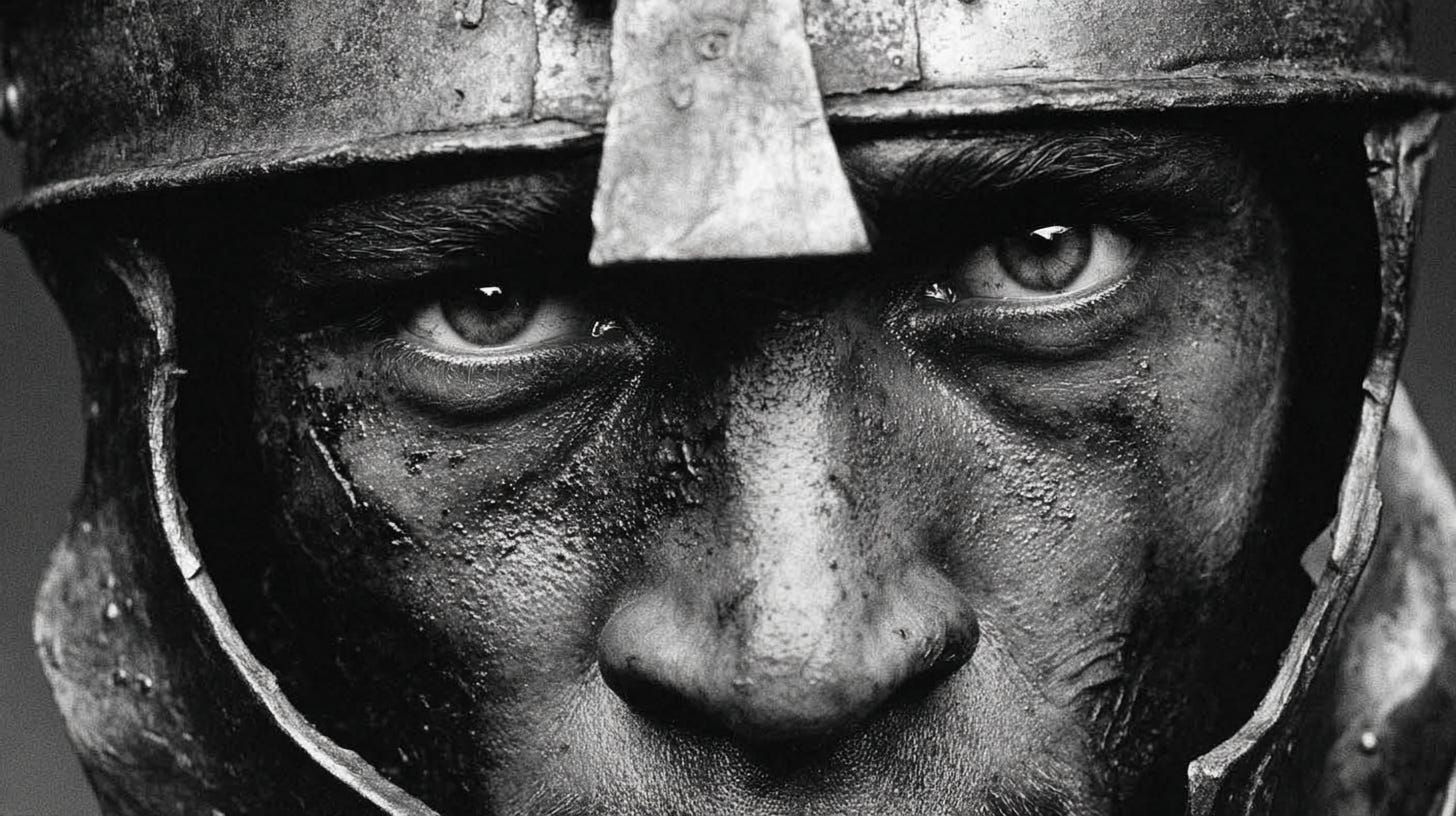
Walk into the Warsaw Uprising Museum in Poland’s capital, and it won’t be long before you’ll begin to feel the eeriness that comes with being surrounded by death.[1] One exhibit allows visitors to cower inside a replica of the sewers where members of the Polish underground resistance used to hide while fighting the Nazis. Another exhibit shows original film footage of the destruction of Warsaw; by January 1945, after the Polish forces surrendered, 85 per cent of the city’s buildings had been flattened. A third is dedicated to the child soldiers and nurses who died fighting for freedom. Around 16,000 members of the resistance were killed fighting in the streets. But the actual death toll was much larger. During and after the uprising, an estimated 150,000 civilian men, women and children died, mostly in mass executions.
The Warsaw Uprising was the largest military effort by a European resistance movement during the Second World War. It lasted sixty-three days. The Soviet Red Army, stationed on the outskirts of Warsaw, failed to provide support. And despite some low-level supply drops by British and South African aeroplanes, most of which fell in Nazi-occupied territories, the Polish underground resistance and their supporters received no military support from the Allied forces making their way to Berlin on the western front. It was an insurgency against a military industrial machine. Defeat was inevitable. After their surrender, almost all Polish forces were interrogated and imprisoned, sent to Gulags or executed. The entire civilian population of Warsaw was expelled and moved to a transit camp. A quarter of them were sent to labour camps in the Third Reich. A fifth were sent to concentration camps such as Auschwitz.
Four months later, on 2 May, Berlin fell to the invading Allied forces. Six days later, war ended in Europe. It would take another four months, and two atomic bombs, to bring the deadliest conflict in human history to an end. Between 1 September 1939, when Nazi Germany invaded Poland, and 2 September 1945, an estimated 80 million people died as a direct consequence of war. Many millions more perished due to starvation and disease.
