

The oldest tool in the book
AI is taking us into the future, but it is also taking us deeper into the past.

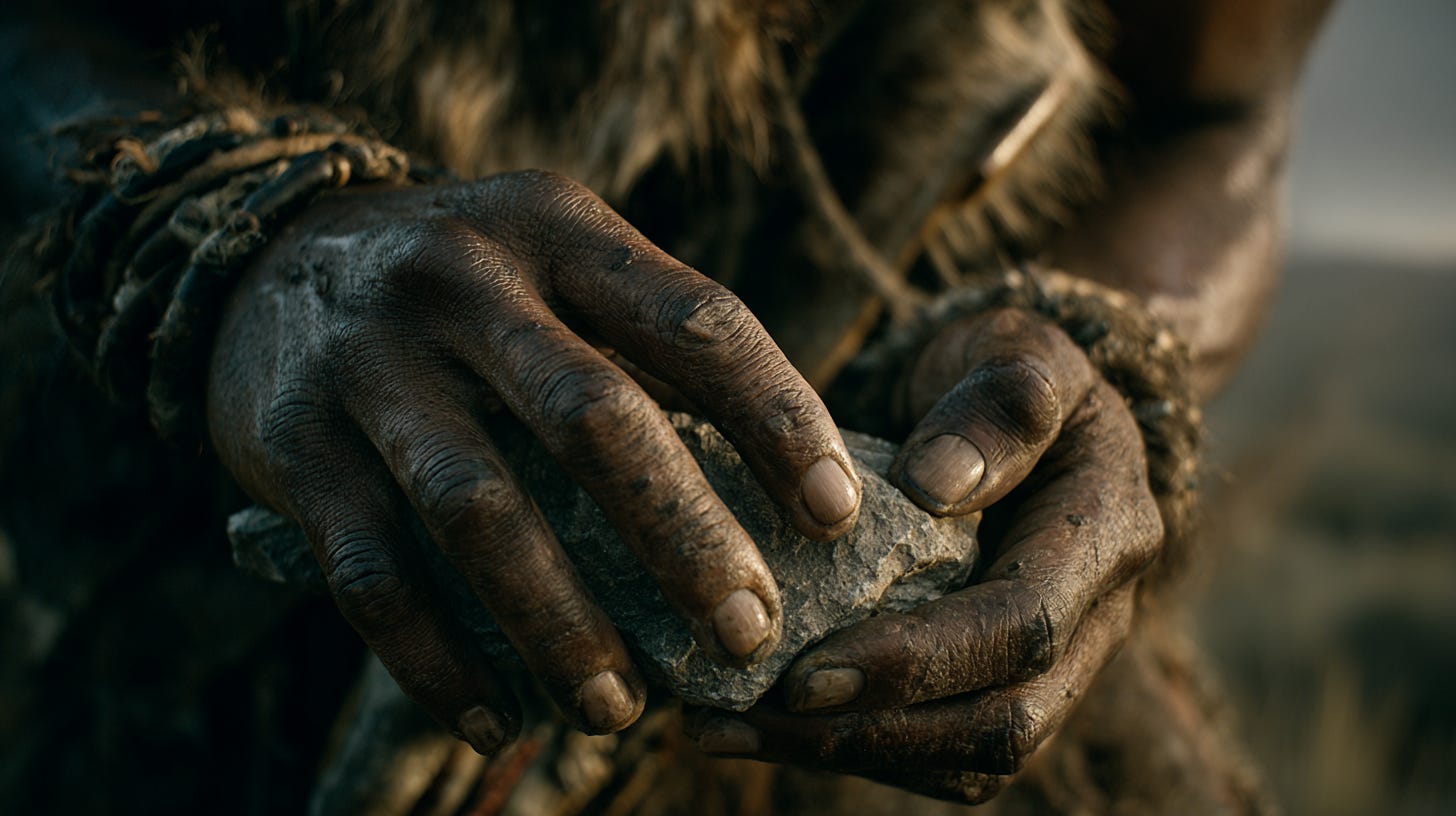
Imagine a small group of people walking across a grassland in what is now KwaZulu-Natal. The year is 220,000 BCE. They are not hunting. They are not gathering food. They are heading, with intent, to a particular outcrop of dark grey rock above the Jojosi River. They have walked this route before. So did their parents, and their parents’ parents, probably for 5000 generations or more. The stone they want is hornfels – a hard, fine-grained rock baked by ancient magma into something that flakes beautifully. They will arrive, knock large blocks into long blades, and carry the blades away to use somewhere else. And then, over the next hundred thousand years, others will keep coming back to do the same thing.
That picture comes from a paper just published in Nature Communications by Manuel Will and an interdisciplinary team working at the Jojosi Dongas, an eroded landscape in the grasslands east of the Drakensberg. The team excavated several thin layers of stone tools across three sites, fitted hundreds of flakes back into the cores they came from, and dated the sediments above and below. The result is the first clear, dated record of people returning to a single rock source for the same purpose – and only that purpose – for more than 100,000 years.
Until very recently, the standard story of how Stone Age people got their tool stone went something like this. They were on the move – hunting, gathering, following water – and when they happened across a useful rock, they picked it up. Archaeologists call this ‘embedded procurement’: stone-collecting was a by-product of doing something else. Making a special trip to a particular place to get a particular rock was thought to be rare, and late, perhaps the sort of thing Neolithic farmers did when they sank flint mines into the chalk of southern England. Pleistocene hunter-gatherers, the textbook said, did not really do this.
Jojosi shows that they did. And much earlier than anyone thought.
