

Cut and dried
The Economic History Society turns 100. As the machines take over the craft, judgement becomes scarce

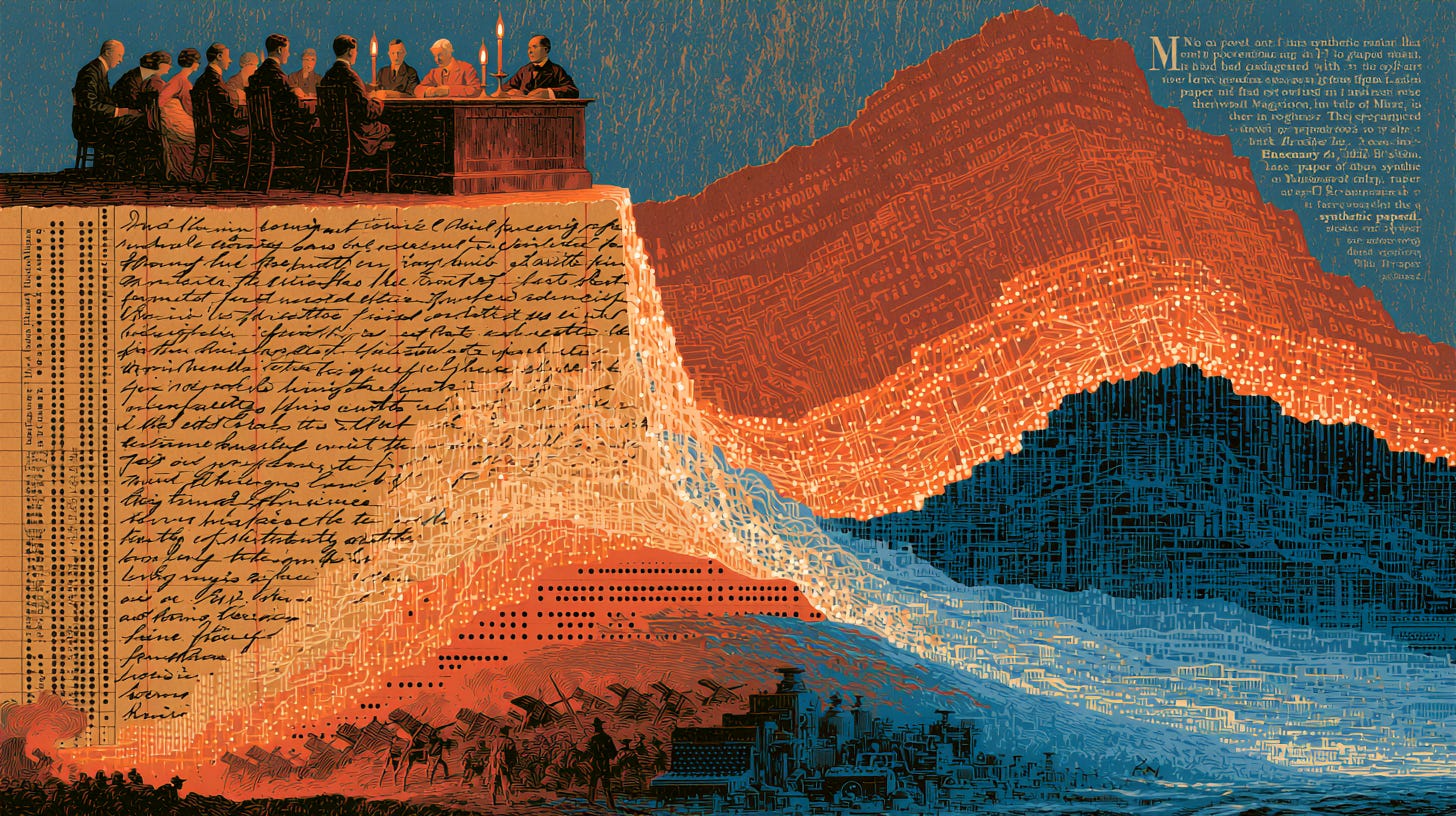
On the evening of 14 July 1926, in a room at the London School of Economics, a small group of scholars sat down to inaugurate the Economic History Society. Everything, in the words of the Society’s later chronicler T. C. Barker, was ‘cut and dried’. Tawney took the chair. The constitution was approved. William Ashley was elected president; Eileen Power and F. W. Tickner joint secretaries; a council drawn from Manchester, Aberystwyth, Edinburgh and Harvard. We are not told how many people attended. The prospectus had been printed in ten thousand copies, and Lipson had agonised over whether the page should carry 43 lines or 44.
That was a hundred years ago this past Tuesday.
What the founders could not have known, as they settled their orderly constitution, was that they had built their Society on the lip of the most volatile two decades in living memory. Within three years, the Great Depression. Within seven, Hitler. Within thirteen, a world war that would scatter and kill many of the scholars whose field they were founding. Eileen Power herself was dead by 1940. Cut and dried it was not.
I have been thinking about that founding this week because I have just written a comment on a new guide to the future of the field – and the future looks about as settled now as it did in 1926…
